English billiards online
- Cue
- 3 balls
- 6 pockets
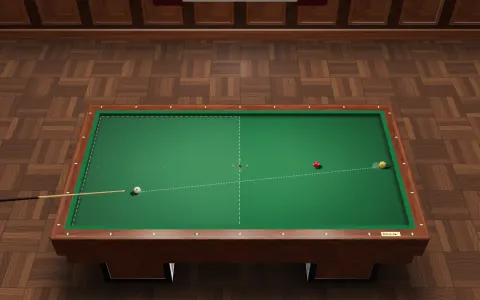
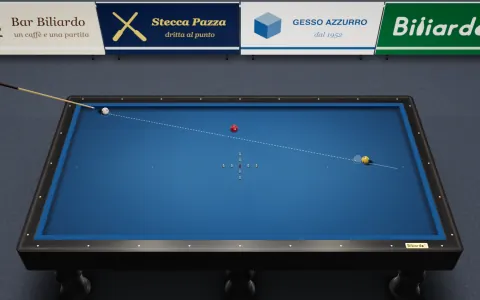
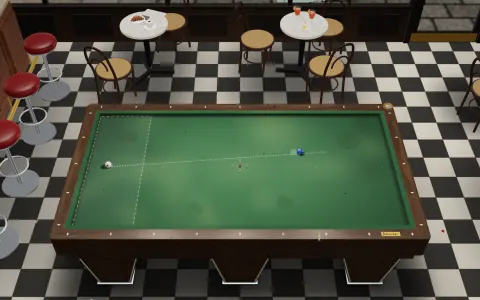
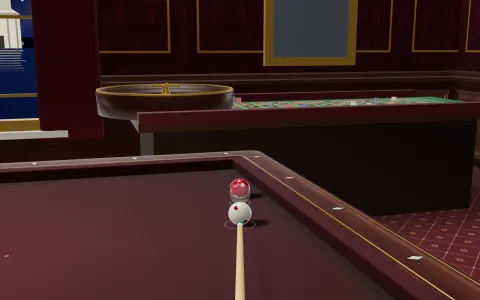
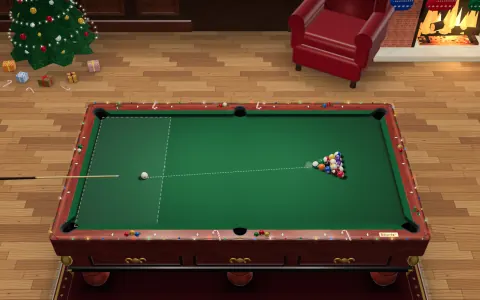
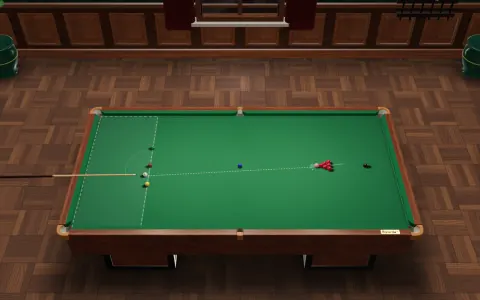
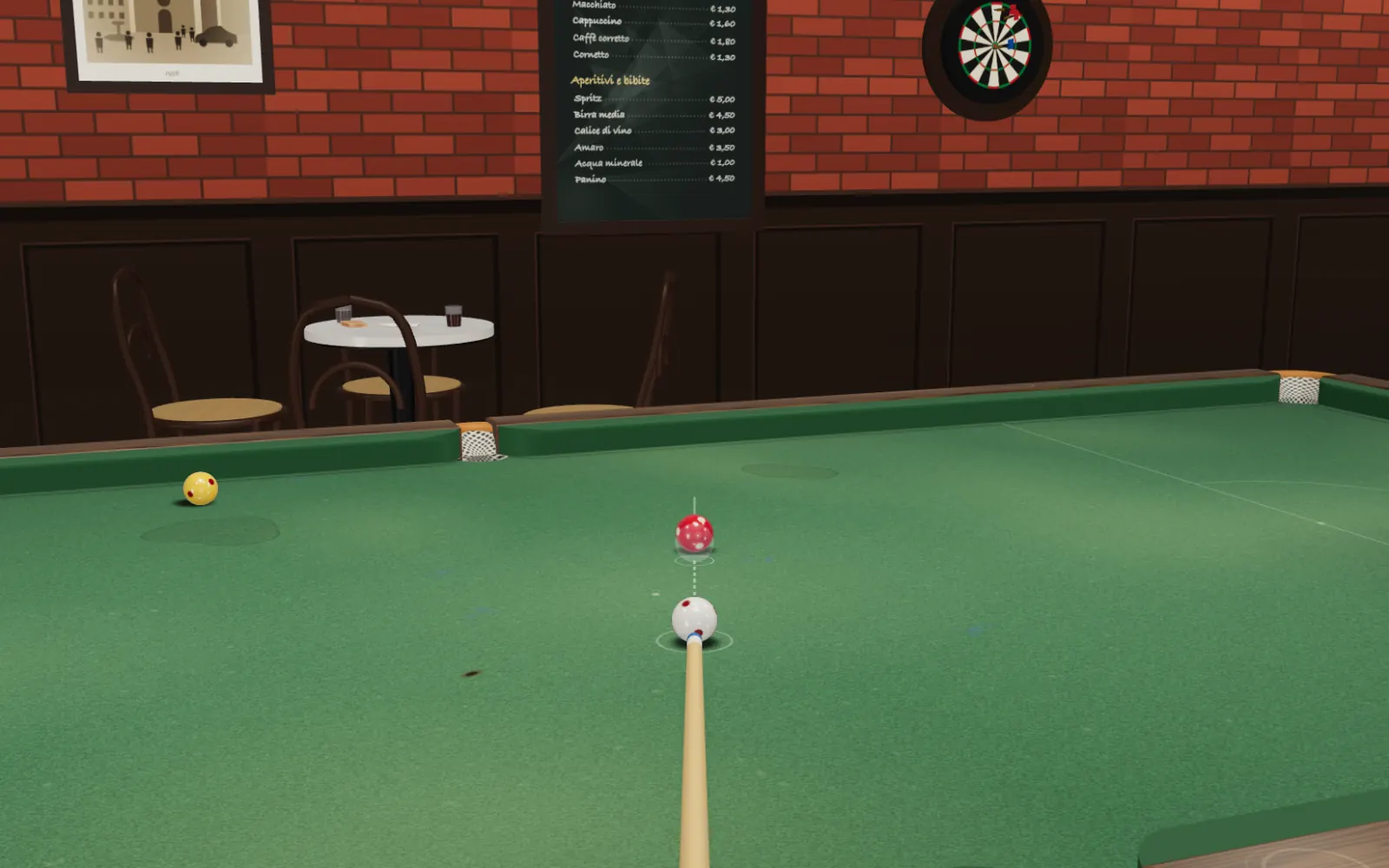
The older game of the 12 ft table, played before snooker was invented: the same table, but just three balls: one player’s white, the other’s yellow and the red. There are three ways to score: potting a ball (the red 3, the opponent’s ball 2), going in-off, the striker’s own ball dropping into a pocket after hitting another (3 or 2, by the ball it hit first), and with a cannon, hitting both other balls in one stroke (2).
- Free
- No sign-up
- Online multiplayer
- Plays in your browser
The striker plays on while scoring, and the first to the points set wins the game, from 25 to 300. As in carom it is a game of long breaks, but here every potted ball comes back: the red on its spot, the striker’s ball in hand, to play from the D. WPBSA rules.
It plays straight away in your browser, with nothing to download. To play without a connection too, download and install it as an app, on phone, tablet and computer: free, and without going through an app store.
English billiards rules
- Games to 25–300 points
- WPBSA rules
- 12 ft table
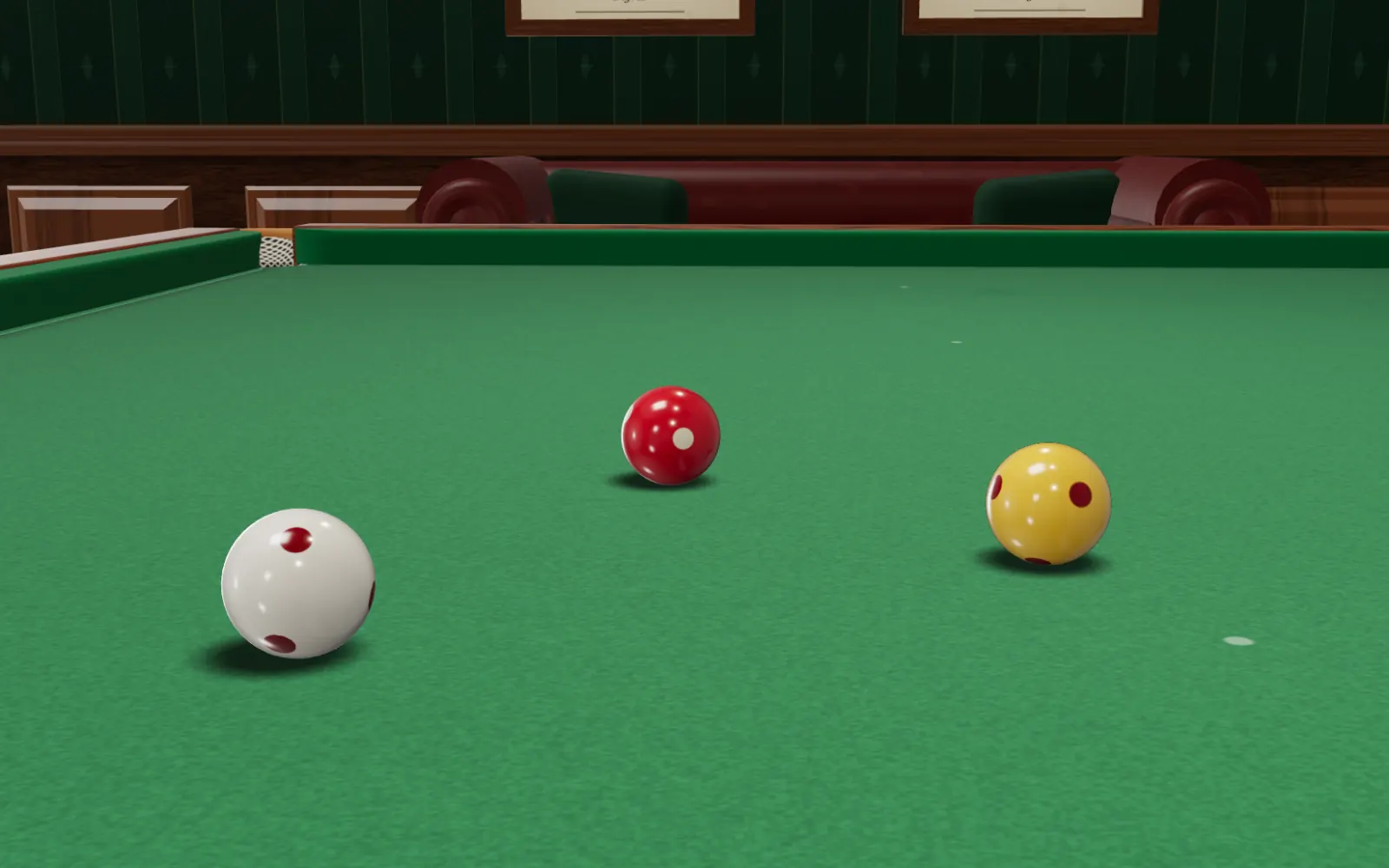
The WPBSA game on the 12 ft snooker table with just three balls: one player’s white, the other’s yellow and the red. Points come from pots, in-offs (the striker’s own ball going into a pocket after hitting another ball: here that scores, it is not a foul) and cannons (the striker’s ball hitting both the others), and the striker plays on while scoring. The first to the points set wins the game.
Scoring
- 2CannonThe striker’s ball hits both the others in one stroke
- 2The other whitePotting the opponent’s ball, or going in-off it
- 3The redPotting the red, or going in-off it: it goes back on its spot
Fouls
Fouls give 2 points to the opponent, who then plays on from where the balls lie, or has the red put on its spot and the offender’s ball on the centre spot and plays from the D.
- No ball hit
- The striker’s ball touches neither of the others (from the D with nothing out of baulk, that is only a miss: 2 points, no foul).
- Out of baulk
- From the D, play must be out of baulk: a ball in baulk may not be hit before the striker’s ball has been out of it.
- Coup
- From the D, with nothing out of baulk, the striker’s ball goes straight into a pocket.
- Ball off the table
- Any ball jumps off the table.
- Limits
- More than 15 pots or in-offs in a row without a cannon, or 75 cannons in a row without a pot or in-off.
- Jump shot
- The striker’s ball jumps over another before hitting one.
The game
- An in-off (also called a losing hazard) is when the striker’s own ball hits another ball and then goes into a pocket. Unlike in pool or snooker it is not a foul: it scores 3 if it hit the red first, 2 if it hit the opponent’s ball first (with a cannon in the same stroke, 3 only if the red was hit first, plus 2 for the cannon). The striker’s ball comes off the table and play goes on from the D. If the striker’s ball goes into a pocket without touching another ball, that is no in-off but a foul (see Fouls).
- The red starts on the spot near the top cushion (snooker’s black spot); each player’s ball starts in hand, played from the D, and an opponent’s ball potted stays off the table until they play it again from the D.
- A potted red goes back on its spot; after two pots of the red off that spot in a row, it goes to the centre spot.
- If the striker’s ball comes to rest touching another, the red goes on its spot, the other ball on the centre spot, and the striker plays from the D.
- Each game runs to the points set; only those count, though a break counts in full. Matches are best of several games, the start alternating.
The official rules
The rules above are the ones Biliardo Plus applies in a match, in short, and they are in the game too, in the Rules window. The full text is the federation’s (in Italian for FIBiS):